
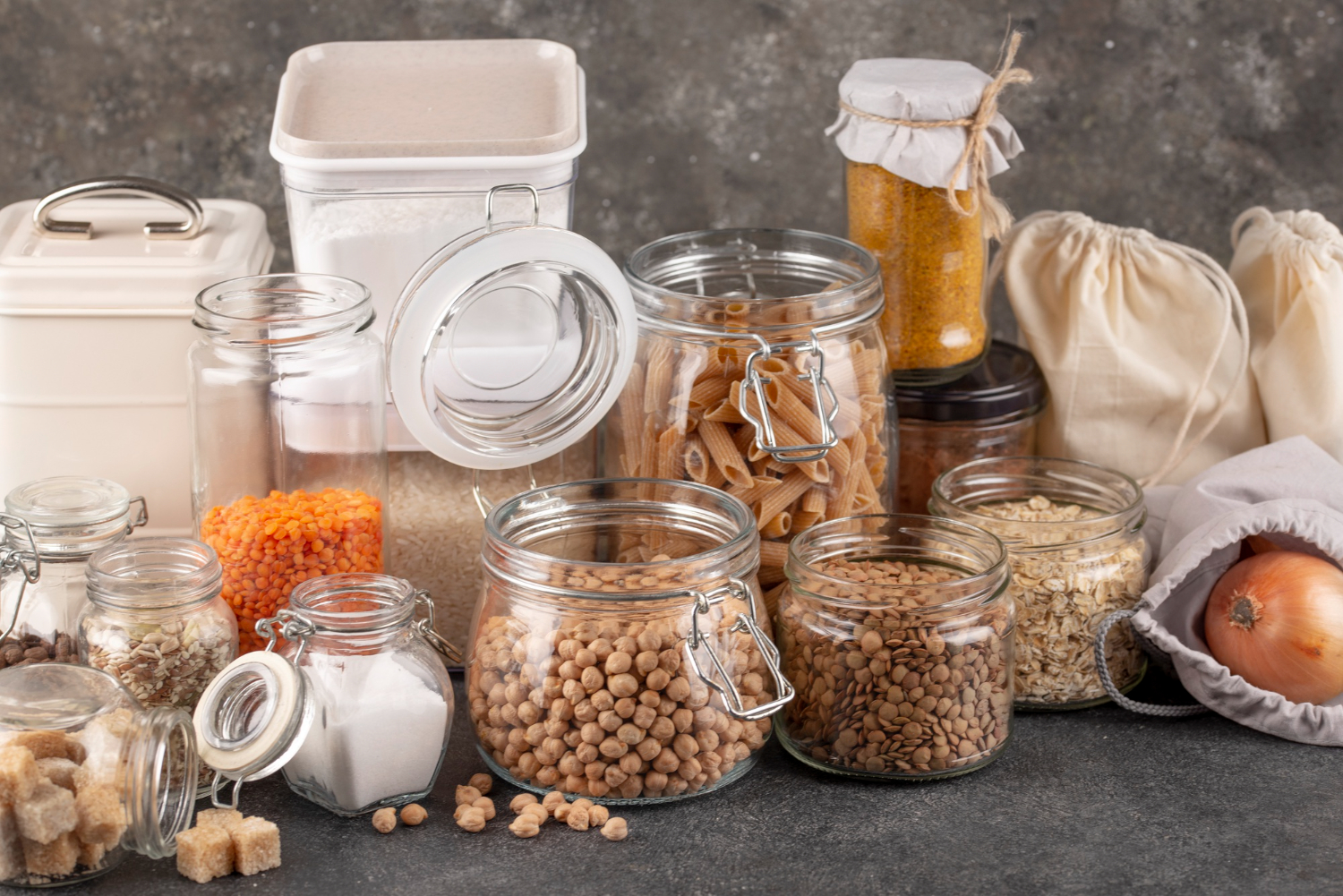
A good pantry doesn’t need to be packed with dozens of ingredients.
In fact, the most useful pantry staples are often the boring ones.
Rice. Pasta. Beans. Canned tomatoes. Oats. Flour.
They don’t look like much sitting on a shelf, but they can become the starting point for a lot of different meals.
That’s what makes them valuable when you’re trying to keep grocery costs down. Instead of buying a separate set of ingredients for every meal, you can build several meals around the same inexpensive staples.
Rice
Rice is one of the most useful budget staples because it can go in so many directions.
You can use it as the base for:
- Rice and beans
- Chicken and rice
- Fried rice
- Burrito bowls
- Rice with roasted or frozen vegetables
- Soup
- Leftover meat and vegetable bowls
You don’t need a different type of rice for every meal.
A basic variety that your household enjoys can do the job.
Pasta
Pasta is another pantry staple that can become several completely different meals.
Start with a box of pasta and change what you add to it.
You can make pasta with:
- Tomato sauce
- Ground meat
- Beans and vegetables
- Cheese
- Leftover chicken
- Frozen vegetables
- Garlic, oil and seasonings
This is why pasta is worth keeping around even when you’re trying to keep your pantry simple.
The pasta doesn’t have to be the entire meal.
It gives you a base for whatever else you have available.
Canned Tomatoes
A few cans of tomatoes can turn into much more than spaghetti sauce.
You can use them for:
- Pasta sauce
- Chili
- Tomato soup
- Shakshuka-style meals
- Rice dishes
- Casseroles
- Bean stews
They’re especially useful because they can sit in the pantry until you need them.
When fresh tomatoes are expensive or out of season, canned tomatoes can also be an easy alternative for cooked dishes.
Beans
Beans can make a small amount of other ingredients go much further.
You can use them in:
- Chili
- Tacos
- Burritos
- Rice bowls
- Soups
- Pasta dishes
- Bean salads
- Rice and beans
Canned beans are convenient.
Dried beans can be less expensive if you’re willing to cook them.
The best choice is the one you’ll actually use.
Oats
Oats are mostly associated with breakfast, but they can do more.
Of course, you can make oatmeal with different toppings.
But oats can also become:
- Homemade granola
- Overnight oats
- Baked oatmeal
- Muffins
- Pancakes
- Crumble toppings
A large container can go a long way if your household regularly eats oats.
Flour
Flour can be useful far beyond baking cookies.
Depending on how you cook, it can help make:
- Pancakes
- Biscuits
- Homemade pizza dough
- Simple breads
- Tortillas
- Sauces and gravies
- Baked goods
You don’t need to become a full-time baker for flour to be useful.
Even a small amount can help stretch other ingredients into a meal.
Potatoes
Potatoes are inexpensive in many stores and can become several different meals.
You can bake them.
Mash them.
Roast them.
Turn them into breakfast potatoes.
Add them to soups and stews.
Use them with eggs.
Top them with beans, cheese or leftover meat.
They’re particularly useful when you need a filling side dish without spending much.
Peanut Butter
Peanut butter can be more versatile than it gets credit for.
You can use it for:
- Sandwiches
- Toast
- Oatmeal
- Smoothies
- Snacks
- Baking
- Peanut sauces
It’s also useful to have around for days when you need something quick and inexpensive.
Canned Tuna
Canned tuna can become a quick meal without requiring much preparation.
You can use it for:
- Tuna sandwiches
- Tuna melts
- Pasta
- Rice bowls
- Salads
- Wraps
- Casseroles
It’s another example of a pantry staple that can help fill the gap when you don’t have fresh meat available.
Broth
Broth may not be a meal on its own, but it can turn basic ingredients into something much more substantial.
Use it for:
- Soup
- Rice
- Beans
- Gravy
- Sauces
- Casseroles
If you regularly cook with it, keeping a few containers or cans in the pantry can make it easier to turn leftovers and inexpensive ingredients into dinner.
Canned Corn
Corn can work in more meals than just a side dish.
Add it to:
- Tacos
- Burrito bowls
- Chili
- Rice dishes
- Soups
- Casseroles
- Salads
It’s especially useful when fresh produce is expensive or you don’t have much available.
Pasta Sauce
A jar of pasta sauce can obviously go over pasta.
But that’s not the only use.
Depending on the type of sauce, you can use it with:
- Meatballs
- Chicken
- Vegetables
- Rice dishes
- Casseroles
- Homemade pizza
You don’t need to buy a different sauce for every meal.
One basic sauce can cover several uses.
Canned Coconut Milk
If you regularly make curries or similar dishes, canned coconut milk can be a useful pantry staple.
It can be used in:
- Curries
- Soups
- Sauces
- Rice dishes
- Smoothies
- Some desserts
This isn’t a staple everyone needs, though.
Only buy it if it fits the food your household already likes.
Lentils
Lentils are inexpensive, filling and useful in a variety of meals.
You can turn them into:
- Lentil soup
- Lentil curry
- Lentil bowls
- Lentil tacos
- Stews
- Simple salads
They’re particularly useful when you’re looking for ways to make meals without relying heavily on meat.
Eggs Can Stretch Pantry Meals
Eggs technically belong in the refrigerator, but they’re worth mentioning because they work so well with pantry staples.
Rice plus eggs can become fried rice.
Potatoes plus eggs can become breakfast.
Pasta plus eggs and cheese can become a simple meal.
Beans plus eggs can become tacos or a bowl.
When your pantry is stocked with basic ingredients, eggs can help turn them into something more filling.
Frozen Vegetables Fill the Gaps
Frozen vegetables aren’t technically pantry staples, but they work with pantry foods so well that they’re worth keeping in mind.
A bag of frozen mixed vegetables can go into:
- Fried rice
- Pasta
- Soup
- Casseroles
- Stir-fries
- Rice bowls
You don’t have to worry about using the entire bag immediately, which can also make them easier to manage than some fresh vegetables.
Canned Chickpeas
Chickpeas are useful for more than hummus.
You can add them to:
- Salads
- Curries
- Pasta
- Rice bowls
- Soups
- Roasted snack mixes
They’re also an easy way to add substance to a meal when you don’t have much meat available.
Seasonings Make the Same Staples Taste Different
This is where a small pantry can feel much bigger.
You don’t need ten completely different sets of ingredients.
You can take rice, beans and vegetables and season them one way for tacos and another way for a rice bowl.
The same pasta can taste completely different with tomato sauce, garlic and oil or a creamy cheese sauce.
A few basic seasonings can give inexpensive ingredients some variety.
Start with the spices you actually use instead of buying every jar on the shelf.
Tortillas
Tortillas are another useful item because they can turn leftovers into completely different meals.
You can make:
- Tacos
- Burritos
- Quesadillas
- Wraps
- Breakfast burritos
- Enchiladas
Leftover chicken, beans, rice and vegetables suddenly have a different purpose when you put them in a tortilla.
Cheese
Cheese can help bring several inexpensive meals together.
Use it with:
- Pasta
- Rice and beans
- Tacos
- Quesadillas
- Baked potatoes
- Eggs
- Casseroles
You don’t need an expensive specialty cheese for most everyday meals.
A basic cheese your household enjoys can cover a lot of ground.
Canned Soup Ingredients
You don’t necessarily need to buy canned soup.
Keeping basic soup ingredients around can make homemade soup surprisingly easy.
Broth, canned tomatoes, beans, pasta, rice and frozen vegetables can all work together.
Add leftover chicken or another protein if you have it.
This is one of the best ways to use small amounts of several ingredients instead of letting them sit around separately.
Think in Combinations, Not Individual Ingredients
This is the trick that makes a pantry work.
Don’t look at a bag of rice and think, “That’s one side dish.”
Look at it as a base.
Don’t look at beans and think, “That’s one ingredient.”
Think about what they can become when combined with other foods.
Rice + beans + salsa = one meal.
Rice + eggs + frozen vegetables = another.
Rice + chicken + vegetables = another.
The same basic foods can keep showing up without making every meal identical.
Build Around a Few Flexible Ingredients
You don’t need everything.
A useful budget pantry might start with:
- Rice
- Pasta
- Oats
- Beans
- Canned tomatoes
- Flour
- Peanut butter
- Broth
- A few seasonings
Then add refrigerator and freezer staples such as eggs, cheese, frozen vegetables and whatever proteins your household regularly eats.
That’s enough to create quite a few combinations.
Don’t Buy Ingredients Just Because They’re Versatile
There’s a difference between an ingredient being versatile and your household actually using it.
You could probably find dozens of ways to use an unusual grain or specialty sauce.
That doesn’t mean you should buy it.
The best pantry staples are versatile and familiar.
You already know your household will eat them.
Use Leftovers as Ingredients
This can stretch your pantry even further.
Yesterday’s rice can become fried rice.
Leftover chicken can go into tacos.
Extra beans can become a burrito filling.
Leftover vegetables can go into soup or pasta.
You don’t always need a brand-new recipe.
Sometimes you just need to look at what you already cooked and give it a different job.
Buy Ingredients That Work Together
When you’re grocery shopping, think about combinations.
Instead of buying a random collection of cheap foods, ask what meals you can make from them.
For example:
Rice + beans + canned tomatoes + spices
can become several different meals.
Pasta + canned tomatoes + cheese + vegetables
can do the same.
This is much more useful than buying something simply because it’s inexpensive.
Keep Your Pantry Simple
A large pantry isn’t necessarily a better pantry.
If you have 40 different ingredients but can’t figure out what to make with them, you’re not getting much value.
A smaller collection of ingredients you use regularly can be much more useful.
You want foods that make it easier to cook when money is tight—not shelves full of ingredients you bought with good intentions.
The Goal Is More Meals From Fewer Purchases
That’s really what a budget-friendly pantry is about.
You’re not trying to collect food.
You’re trying to create options.
Rice can become a side, a bowl, fried rice or part of a soup.
Beans can become tacos, chili, soup or a filling for another meal.
Pasta can take on completely different flavors depending on what you add.
Once you start thinking this way, grocery shopping gets a little easier.
You don’t need a separate ingredient for every recipe.
You need a few inexpensive foods that can work together in different ways.
And that’s where pantry staples can really earn their place in your grocery budget: not because they’re cheap on their own, but because one purchase can help create several meals.