
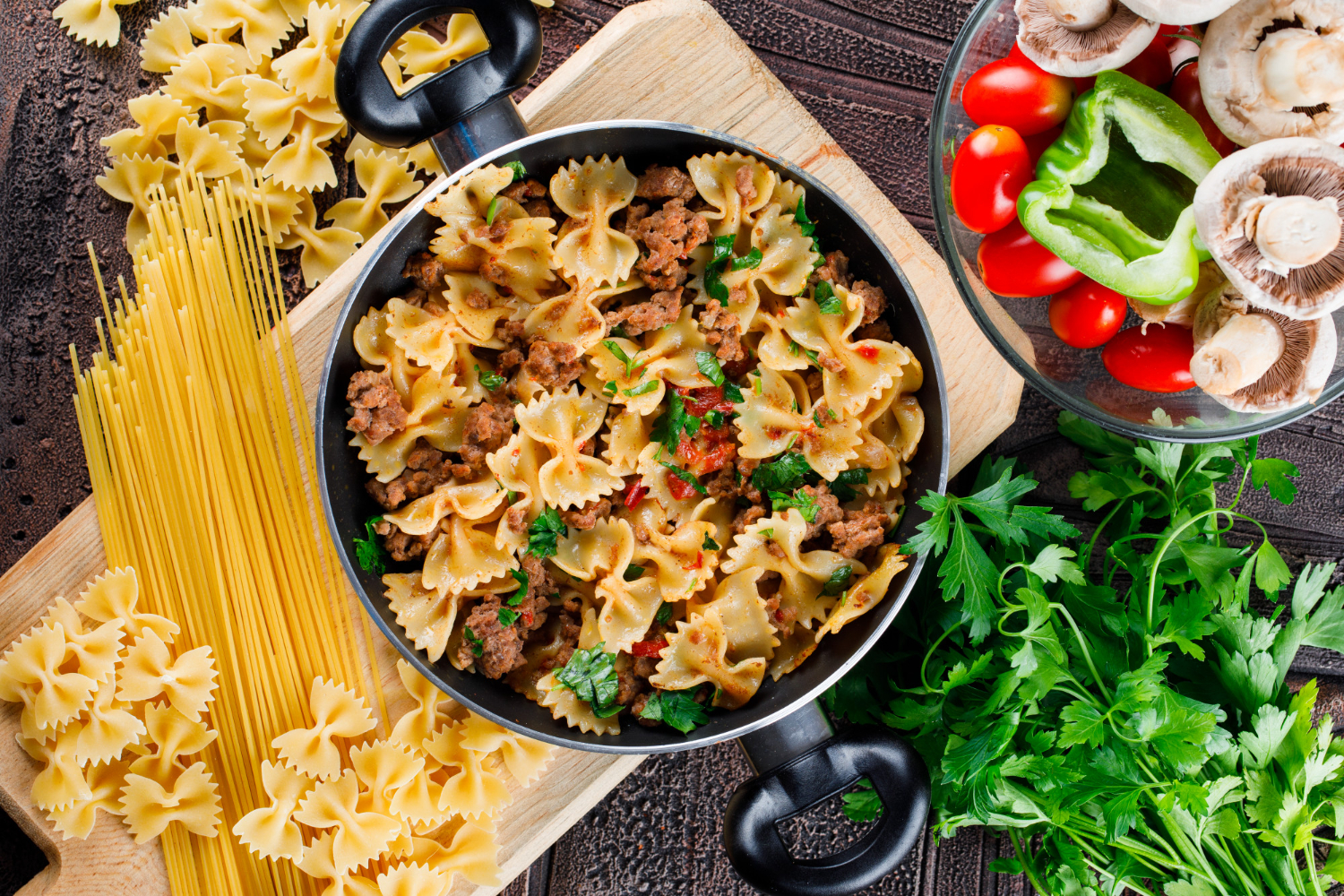
Meal planning can get expensive when every dinner starts with a completely different recipe.
One meal needs chicken and a special sauce. Another needs a different type of meat, a specific cheese, and three vegetables you won’t use again. By the end of the week, you’ve spent more than expected and still have a refrigerator full of half-used ingredients.
A better approach is to build meals from a small group of inexpensive staples that work well together.
Instead of planning seven completely different recipes, you keep a few basic ingredients on hand and mix them together in different ways.
It makes grocery shopping simpler, reduces waste, and gives you plenty of options without requiring a huge grocery budget.
What Are Budget Staples?
Budget staples are foods that are relatively affordable, filling, and useful across multiple meals.
The exact foods will depend on what your household likes, but common examples include:
- Rice
- Pasta
- Potatoes
- Beans
- Lentils
- Eggs
- Oats
- Bread
- Tortillas
- Frozen vegetables
- Canned tomatoes
- Chicken
- Ground meat
- Cheese
- Seasonal produce
The important part isn’t finding the absolute cheapest food.
It’s finding ingredients that you will actually eat and can use in several different ways.
Think of Meals as Building Blocks
A mix-and-match meal usually has a few basic parts:
A base: rice, pasta, potatoes, bread, or tortillas
A protein: beans, eggs, chicken, ground meat, cheese, or another protein you like
A vegetable: fresh, frozen, canned, or leftover vegetables
A flavor: salsa, sauce, herbs, spices, or another condiment
Once you think about meals this way, you don’t need a separate recipe for every combination.
You can simply mix and match the pieces you already have.
Start With One Affordable Base
Choose one or two filling staples that can carry several meals.
Rice is a good example.
You can use it for:
- Rice and beans
- Chicken bowls
- Fried rice
- Burrito bowls
- Stir-fry
- Curry
- A simple side dish
Potatoes work in much the same way.
They can become baked potatoes, breakfast hash, roasted potatoes, potato soup, or a base for meat and vegetables.
The point is to buy something that can do more than one job.
Add a Flexible Protein
You don’t need meat at every meal, and you don’t need an expensive protein every night.
Eggs, beans, lentils, and cheese can all help build filling meals.
If you do buy meat, look for something that can be used several ways.
Chicken can become tacos, sandwiches, bowls, soup, or pasta.
Ground beef can become tacos, chili, burgers, pasta sauce, or rice bowls.
The more uses an ingredient has, the easier it is to work into a mix-and-match plan.
Use Frozen Vegetables Without Apologizing for Them
Fresh vegetables are great, but frozen vegetables can be extremely useful for budget meal planning.
They don’t spoil as quickly, they’re available year-round, and you can use exactly what you need.
A bag of frozen mixed vegetables can go into fried rice, soup, pasta, casseroles, or a quick skillet meal.
You don’t have to use fresh produce exclusively to have a good grocery plan.
What matters is buying vegetables your household will actually eat.
Let Sauces Do Some of the Work
You can make the same basic ingredients taste completely different by changing the sauce.
Rice, chicken, and vegetables can become a Mexican-style bowl with salsa.
Add a different sauce and the same basic ingredients can move in another direction.
Tortillas filled with the same chicken can become tacos, quesadillas, or wraps depending on what you add.
A few sauces and seasonings can create variety without requiring an entirely different grocery list.
Build Meals Around What You Have
Before grocery shopping, look at your pantry, refrigerator, and freezer.
You might already have rice, pasta, eggs, beans, frozen vegetables, and cheese.
Instead of deciding that you need seven new dinners, figure out what those ingredients can become.
Maybe you only need to buy fresh fruit, milk, and one protein.
This is one of the simplest ways to keep a grocery budget under control.
Use the Same Ingredients in Different Combinations
Suppose you have:
- Rice
- Black beans
- Eggs
- Cheese
- Frozen peppers
- Tortillas
- Salsa
You already have several possible meals.
You could make breakfast burritos with eggs, peppers, cheese, and tortillas.
Later, you could make rice and beans with salsa.
The rice, beans, and peppers could become a bowl.
The tortillas, beans, and cheese could become quesadillas.
You didn’t buy ingredients for four separate recipes.
You bought a group of foods that work together.
Make Leftovers Part of the System
Mix-and-match meals are especially useful for leftovers.
Let’s say you cook chicken on Monday.
You could serve it with rice and vegetables that night.
The next day, use the leftover chicken in a tortilla with cheese and salsa.
Later in the week, add the remaining chicken to fried rice.
The ingredients overlap, but you’re not necessarily eating the same meal three times.
This is a great way to get more value from a larger package of meat.
Don’t Cook Everything at Once
You can batch cook if you enjoy it, but you don’t have to prepare an entire week’s worth of food on Sunday.
Sometimes it’s better to keep ingredients separate.
Cook a pot of rice.
Prepare some chicken.
Keep vegetables available.
Then decide how you want to combine them each day.
This gives you flexibility if your plans change.
It also makes it easier to avoid getting tired of eating the same thing.
Use Breakfast Staples Beyond Breakfast
Some inexpensive foods don’t have to stay in the category they’re usually associated with.
Eggs can be used for dinner.
Potatoes can be used for breakfast.
Oats can become more than just oatmeal.
Bread can become sandwiches, toast, French toast, or breadcrumbs.
Thinking beyond traditional meal categories gives you more options without requiring more groceries.
Keep a Few “Glue” Ingredients Around
Some ingredients make it easier to turn random foods into a complete meal.
These might include:
- Eggs
- Cheese
- Tortillas
- Bread
- Rice
- Pasta
- Canned beans
- Canned tomatoes
- Broth
- Salsa
- Frozen vegetables
You don’t need all of them at once.
The idea is to keep a few inexpensive ingredients that can bring other foods together.
A little leftover chicken and some vegetables may not seem like dinner.
Add rice and a sauce, and you’ve got a bowl.
Add tortillas and cheese, and you’ve got quesadillas.
Add eggs, and you have a scramble.
Shop for Overlap
When you’re making your grocery list, look for ingredients that appear in several meals.
For example, if you buy:
- Chicken
- Rice
- Bell peppers
- Onions
- Tortillas
- Cheese
- Salsa
you can make several different meals without needing many additional ingredients.
This is much more efficient than buying ingredients that only work for one specific recipe.
Buy What Your Household Actually Eats
A cheap ingredient isn’t a bargain if nobody wants to eat it.
You might find that beans, lentils, or rice are inexpensive, but if your household won’t touch them, buying a huge quantity doesn’t help your budget.
The same applies to vegetables.
If fresh spinach constantly gets thrown away, buying more of it isn’t saving money.
Build your mix-and-match system around foods your household already likes.
You can introduce new foods gradually, but don’t build your entire budget around ingredients that won’t get eaten.
Use Meat as an Ingredient Instead of the Entire Meal
One easy way to lower meal costs is to stop making meat the center of every plate.
Instead of serving a large piece of chicken with a small amount of everything else, use chicken as one part of the meal.
A smaller amount of chicken can go into:
- Rice bowls
- Tacos
- Pasta
- Soup
- Stir-fry
- Quesadillas
Beans, eggs, rice, potatoes, and vegetables can fill out the rest.
This can make a package of meat stretch across more servings.
Keep Portions Flexible
Not everyone in a household eats the same amount.
One person may want a large serving of rice, while another wants more vegetables or protein.
Mix-and-match meals make this easier.
Everyone can build their own plate or bowl based on what they want.
This can also reduce food waste because you’re not automatically putting the same amount of every ingredient on everyone’s plate.
Have a Few Reliable Combinations
You don’t need endless possibilities.
A handful of reliable meals can make a big difference.
For example:
Rice + beans + vegetables + salsa
Potatoes + eggs + cheese + vegetables
Pasta + tomato sauce + ground meat + vegetables
Tortilla + chicken + cheese + salsa
Rice + chicken + frozen vegetables + sauce
These aren’t complicated recipes.
They’re combinations you can fall back on when you don’t know what to make.
Don’t Confuse Variety With Complexity
A meal doesn’t need ten ingredients to feel different.
A change in sauce can make a difference.
So can changing the base.
Chicken and vegetables over rice feels different from chicken and vegetables inside a tortilla.
Beans with rice and salsa are different from beans mixed into chili.
Simple meals can still have variety.
In fact, keeping things simple is part of what makes a mix-and-match system work.
Plan Your Grocery Budget Around the System
Once you know which staples your household uses regularly, your grocery budget becomes easier to predict.
You can separate your shopping into a few basic categories:
Staples: rice, pasta, potatoes, beans, bread
Proteins: chicken, eggs, ground meat, etc.
Produce: fresh or frozen vegetables and fruit
Flavor: sauces, spices, cheese, condiments
Then adjust quantities based on your household size and what you already have.
You don’t need to start from scratch every week.
You’re maintaining a group of ingredients that can become meals.
A Mix-and-Match Week Doesn’t Have to Look Perfect
Real life doesn’t always follow a meal plan.
Maybe you have leftovers one night.
Maybe someone eats dinner somewhere else.
Maybe you don’t feel like cooking.
That’s fine.
The advantage of having flexible ingredients is that you can change the plan without wasting food.
If Tuesday’s dinner doesn’t happen, the chicken can be used Wednesday.
If you have more rice left than expected, make fried rice later.
You’re not locked into a seven-day schedule.
Start Small
You don’t need to completely change the way you grocery shop.
Pick three or four staple ingredients and see what you can do with them.
For example:
- Rice
- Chicken
- Frozen vegetables
- Tortillas
Then think of five different combinations.
Once you get comfortable with that, add another protein or a few different sauces.
Eventually, you’ll have a mental list of combinations you can throw together without much thought.
The Goal Is Flexibility
A good grocery plan shouldn’t make you feel trapped.
Mix-and-match meals give you a basic structure while leaving room to change things.
You’re buying ingredients with multiple uses.
You’re using leftovers instead of forgetting them.
You’re relying on inexpensive staples to fill out meals.
And you’re avoiding the need to buy a completely different set of ingredients every time you want something different for dinner.
You don’t need a complicated meal plan to eat well on a budget. A handful of inexpensive staples, combined in different ways, can give you enough variety to get through the week without making your grocery cart—and your grocery bill—bigger than they need to be.